Blog
How to find the Right Chronic Lymphocytic Leukemia (CLL) Clinical Trial? A Personalized Approach
Samar Elkassas
May 11, 2026

Chronic Lymphocytic Leukemia is one of the most common types of adult leukemia. While some patients may live for years without needing treatment, others may require therapy soon after diagnosis or experience disease progression over time.
Why CLL Trial Matching Is Complex
Because CLL behaves differently from one patient to another, finding the right treatment, including clinical trial options, often depends on much more than the diagnosis alone.
Factors such as genetic mutations, biomarker status, previous treatments, response to therapy, and refractory or relapsed disease status can all influence which clinical trials may be appropriate.
That is where personalised clinical trial matching becomes important.
Modern CLL clinical trials are increasingly designed for very specific patient groups. A trial may require or exclude:
TP53 aberration
del(17p)
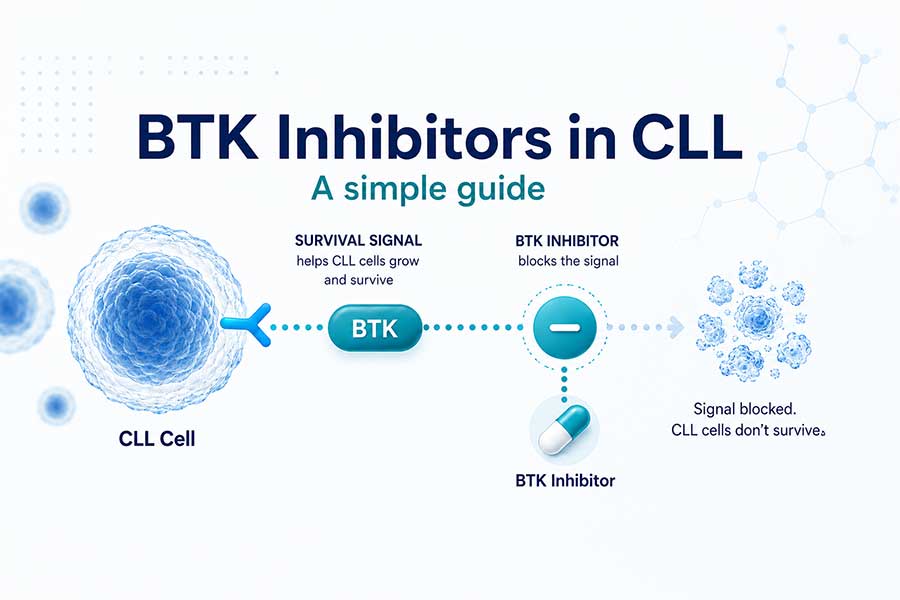
BTK inhibitor refractory disease
Specific prior lines of therapy
Minimal residual disease (MRD) status
Previous stem cell transplant history
This means that two patients with CLL may qualify for completely different trials based on their individual disease characteristics and treatment history. For many patients and caregivers, understanding these requirements can feel overwhelming.
How CancerBot Helps Simplify CLL Clinical Trial Matching
CancerBot helps patients navigate this complexity through AI-powered precision clinical trial matching.
Instead of searching through hundreds of studies manually, CancerBot analyses a patient's own disease features and treatment history to identify trials that may fit their unique profile.
CancerBot supports matching across clinically relevant CLL features, including:
Genetic & Molecular Markers
TP53 aberration
del(17p)
IGHV mutation status
ATM mutation
NOTCH1 mutation
Treatment History
Prior lines of therapy
BTK inhibitor exposure
BCL2 inhibitor exposure
Stem cell transplant history
CAR-T exposure
Prior anti-CD20 therapy
Disease & Response Status
Relapsed disease
Refractory disease
Richter transformation
Response to prior treatment (CR, PR, SD, PD)
This allows patients to explore trials aligned with their real clinical situation rather than broad disease labels alone.
Designed to Be Patient-Friendly
Clinical trial terminology can be difficult to understand. Terms like "refractory disease", "line of therapy", "autologous transplant", or "TP53 aberration" may not always be explained clearly in medical records or clinic discussions.
CancerBot is designed with patient guidance in mind, using:
Plain-language explanations
Guided data entry
Educational tooltips
Structured disease-specific workflows
to help patients provide more accurate information and better understand their options.
Keeping Clinical Trial Data Up to Date
The landscape of CLL treatment continues to evolve rapidly, especially with BTK inhibitors, bispecific antibodies, CAR-T therapies, and combination targeted therapies. CancerBot continuously reviews and updates clinical trial information to reflect evolving eligibility criteria and emerging treatment approaches.
Bottom Line
Clinical trials are becoming increasingly personalised, and clinical trial matching should evolve the same way.
By combining structured disease understanding with AI-assisted matching, CancerBot aims to make the clinical trial search process more personalised, more understandable, more patient-friendly, and more efficient for people living with CLL and their care teams.
Explore personalised CLL trial matching with CancerBot and discover clinical trials aligned with your disease profile, biomarkers, and treatment history.



Blog